

Blog
May 19, 2026
You've decided you want a timber frame home. Now comes the harder part: choosing the right team to design, manufacture and build it.
The timber frame industry is not large, but it's diverse. There are regional craftspeople running one-person shops, mid-size manufacturers selling frame-only packages, full-service companies offering design through delivery, and everything in between. The company that's right for a modest cabin is not necessarily equipped to handle a complex custom home on a difficult mountain site.
These eight questions will help you evaluate any timber frame company, and understand what you're actually comparing when quotes look very different.
Some timber frame companies are manufacturers only. They take your architect's drawings, cut the timber to spec, and ship it. Others have in-house design teams that work with you from concept through construction documents.
The distinction matters for two reasons.
First, an in-house design capability means your timber frame manufacturer can integrate the structural frame with your architectural intent from the beginning, rather than reverse-engineering it from finished drawings. Complex rooflines, exposed steel connections, and mixed-media elements all benefit from early structural thinking.
Second, if you don't have an architect yet, a company with an in-house design team can help you develop the design itself: refining floor plans, generating 3D models, and producing the construction documents your builder needs.
What to ask: Do you have an in-house design team? What does that process look like, and at what stage do we start working together?
This is the question most buyers fail to ask clearly. It is why quotes from competing companies can look wildly different.
A “timber frame package” can mean:
If you want the item-by-item breakdown of what is and is not in a Canadian Timberframes materials package, that is covered in our article: What's Included in a Canadian Timberframes Materials Package. Pair it with the questions below when you start comparing quotes from different suppliers.
Each layer adds cost, but also value. A company quoting frame-only at a lower price is not necessarily cheaper than a company quoting a full package. It just means you will need to source, coordinate, and manage more of the building scope yourself.
What to ask: What exactly is included in this quote? What falls outside your scope? Who supplies and coordinates the enclosure systems, windows, and interior timber finishes?
Not all manufacturing is equal. Traditional hand-cutting produces beautiful work but can introduce variability and takes longer. Modern CNC pre-cutting delivers sub-millimetre joinery accuracy at scale. That translates to faster site assembly, less on-site adjustment, and a structure that goes together as designed.
The best operations combine both: CNC precision for the cutting and joinery, hand finishing and inspection for the aesthetic details that cannot be machined.
What to ask: How is your timber cut and processed? Do you use CNC technology, hand-cutting, or a combination? Can I visit the facility?
This one surprises many buyers, but it has a direct impact on your project lead time, timber quality, and cost.
A company with an on-site sawmill can source logs directly, air-dry to spec, and begin manufacturing without relying on third-party lumber supply. In a market where timber supply can be unpredictable, that vertical integration means shorter lead times, more consistent quality, and greater flexibility to respond to design changes.
What to ask: Do you have your own sawmill and log inventory? How do you source your timber, and how does that affect lead times?
A straightforward two-storey home with a simple gable roof is very different from a compound with multiple roof planes, a cantilevered great room, custom steel plate connections, and a CLT floor system. Not every company has the design capability, engineering relationships, and manufacturing equipment to execute the latter.
Ask to see examples of projects similar in complexity to yours, beyond just the most impressive photos on their website. Look for projects that reflect the specific challenges your design presents.
What to ask: Have you done projects similar to mine in scale and complexity? Can you share examples? Who handles the structural engineering, and how do they coordinate with your design team?
A timber frame is a precision-manufactured product that needs to arrive at your site in the right order, at the right time, and ready to install. The raise typically happens over a few days with a crane. If anything is missing, damaged, or sequenced incorrectly, the cost in crane time and labour is significant.
Ask how packages are labeled, organized, and loaded for delivery. Ask whether they have delivered to sites with access constraints similar to yours (steep driveways, remote locations, mountain roads). Ask what happens if there is a discrepancy or missing piece on site.
What to ask: How is the package prepared for delivery? How do you handle remote or access-constrained sites? What is your process if there is an issue on delivery day?
Your relationship with the timber frame company does not end when the truck leaves. During the raise and throughout the installation process, questions will come up from your builder, your site supervisor, or your structural engineer. How responsive and available is the company during that phase?
Some manufacturers deliver labeled packages with numbered timbers, interactive 3D assembly models, and a support team available throughout the raise. Others ship the package and consider their job done. For a first-time timber frame buyer or a builder working with timber for the first time, the difference is meaningful.
What to ask: What support do you provide during installation? Do you offer on-site support or is it remote? What documentation comes with the package?
Longevity matters in a niche industry. A company that has been designing and manufacturing timber frames for 25+ years has seen problems you have not thought of yet, and developed systems to prevent them. A newer operation may be talented, but you are paying tuition on your project.
Ask for references, and look beyond the two happy clients on the testimonials page. Ask to speak with a builder who has installed one of their packages, and an owner who has lived in the home for at least a few years.
What to ask: How long have you been in business? Can I speak with a past client, specifically one whose project was similar to mine in complexity?
At Canadian Timberframes, we have been designing and manufacturing timber frame structures for more than 25 years. Our team includes in-house designers, manufacturing specialists, and project coordinators who stay with your file from first conversation through delivery.
We operate our own sawmill with Interior Douglas Fir and Western Red Cedar inventory. Our K2i six-axis robotic CNC processes every timber with precision joinery before hand-finishing and inspection. We supply not just the structural frame, but full enclosure systems, windows and doors, and interior timber finishes, all under one point of contact.
We deliver across Canada and the United States. Our packages arrive labeled and numbered, with an interactive 3D HTML model that shows your builder exactly where each timber goes. Our team is available throughout the raise and beyond.
If you are evaluating your options and have questions you would like to ask us directly, we would welcome the conversation.
Ready to move forward with a project? schedule a consultation with our team, view our portfolio, or explore floor plans for a starting point.
Or call us at 1-877-348-9924.


Choosing a timber frame company is harder than it looks. Eight questions to ask any supplier before you sign, with what their answers tell you about scope, manufacturing, and support.
Read more
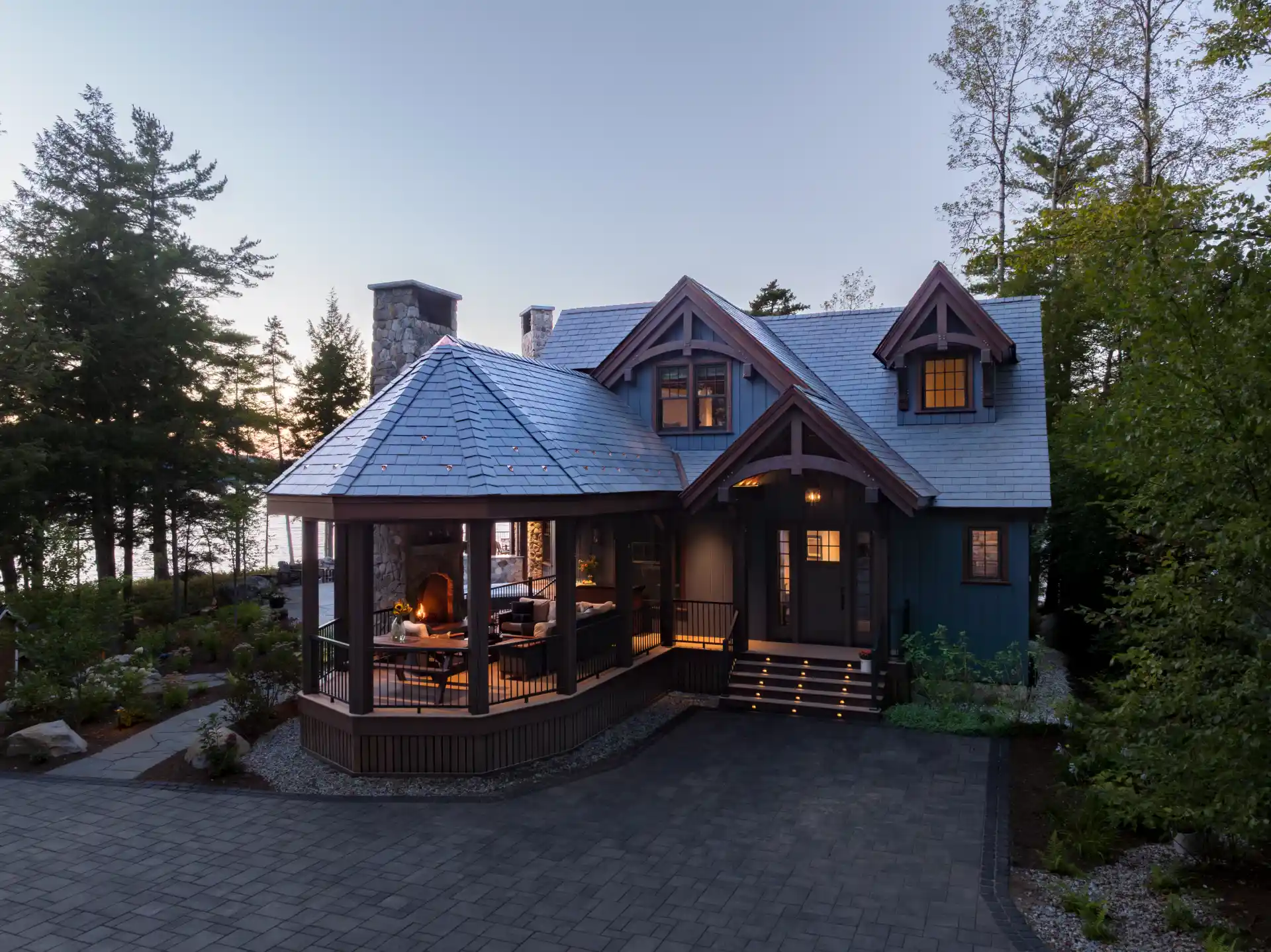
When to engage the manufacturer, how files exchange, what CNC capacity allows, and how connections get detailed on prefabricated timber.
Read more
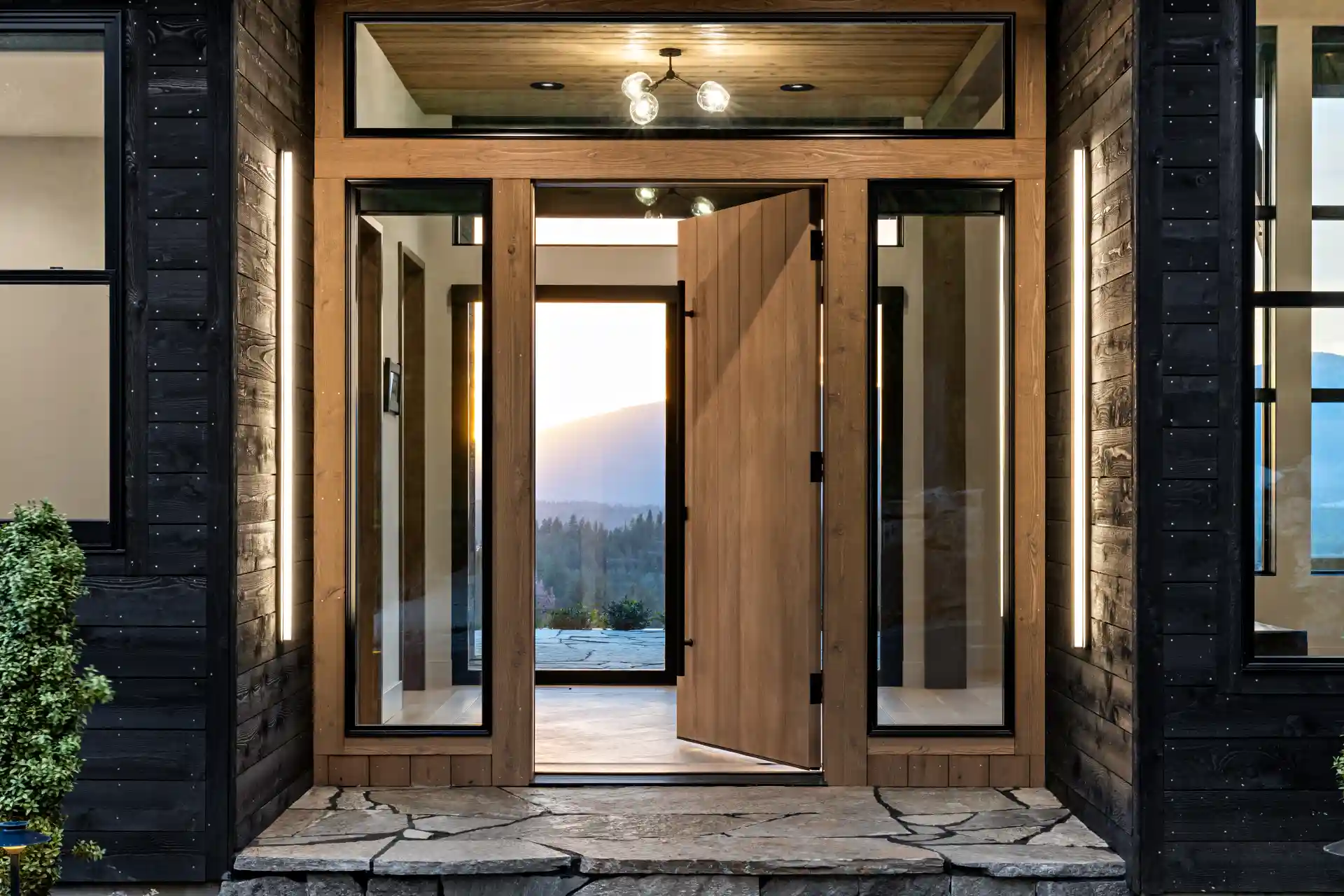
Why do residential timber frame projects exceed budget? Learn the most common cost drivers in luxury timber frame homes and how a shared model helps builders stay on track.
Read more
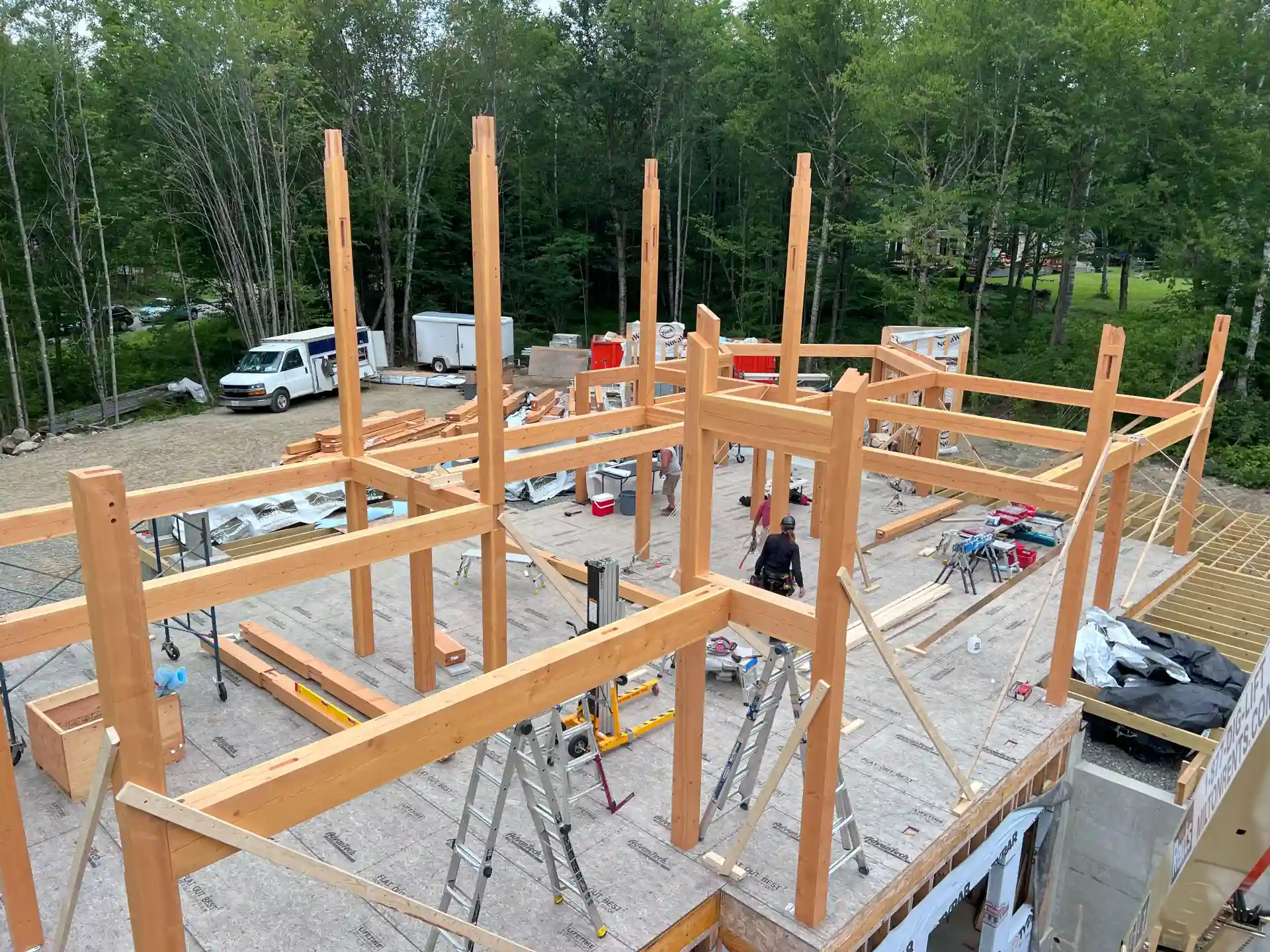
A custom timber frame kit isn't a flat-pack house. Learn what's included, what's not, and how to read a quote so you avoid budget surprises.
Read more
.webp)
Honest comparison of timber and steel on cost, carbon, and schedule for commercial work. Where each wins, and why most commercial projects use a hybrid of both.
Read more
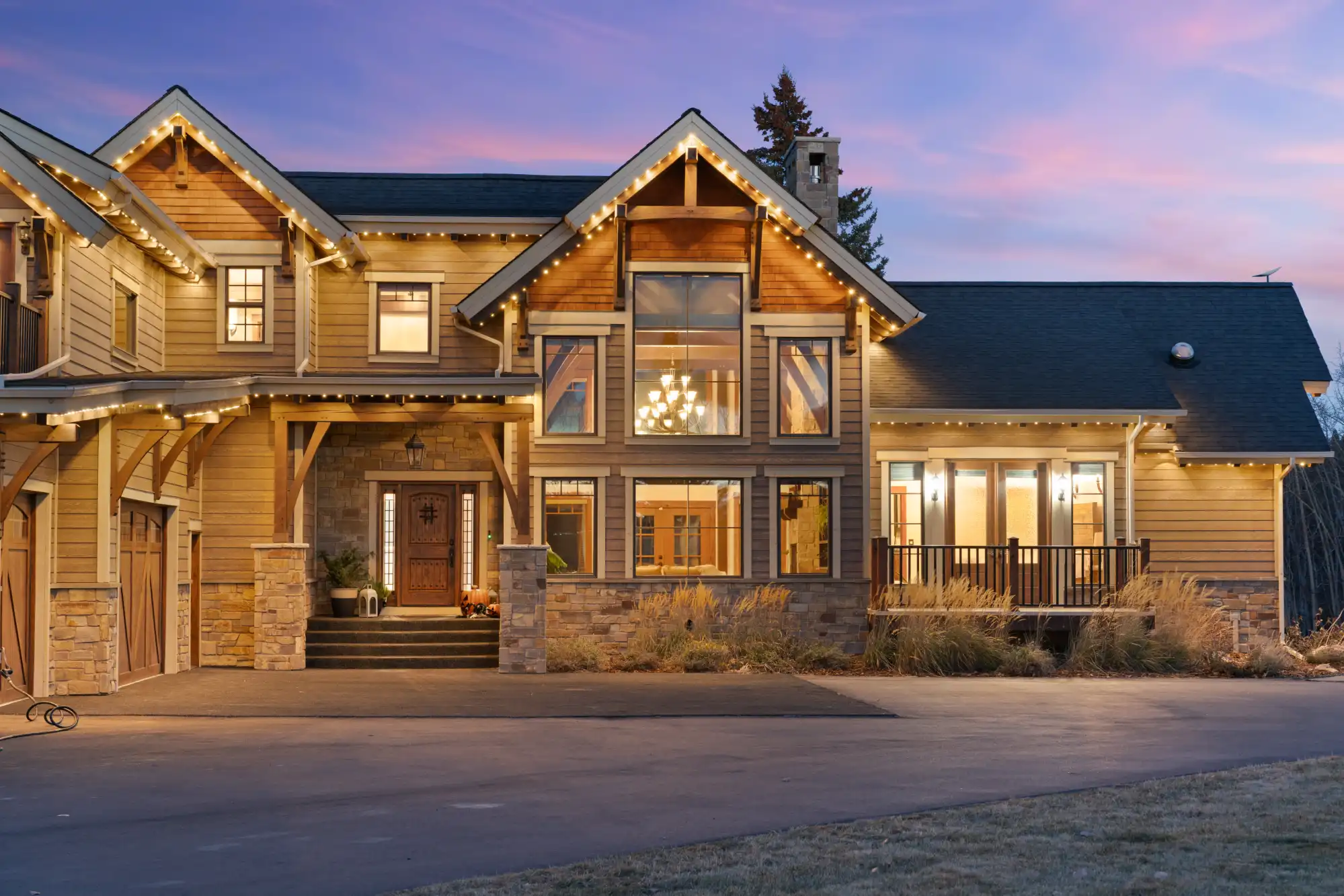
A guide to what drives timber frame home costs in 2026 — from structural package pricing and total build cost per square foot, to the design choices that genuinely push the number up or down.
Read more
.webp)
Discover what goes into building a luxury timber frame home, including realistic timelines, turnkey investment ranges, and expert planning insights to help you prepare for a successful custom build.
Read more

Timber framing combines natural beauty with strength, using glulam and solid timber-each with unique advantages. Glulam offers engineered strength and design flexibility for long spans and curves, while solid timber provides authentic character and warmth. Both are sustainable, and blending them lets you balance performance with natural aesthetics to create strong, visually appealing timber structures.
Read more

Discover how timber framing integrates into the custom home design and build process. Learn how Canadian Timberframes collaborates with architects, engineers, and builders to refine designs, optimize manufacturing, and support smooth construction from concept to completion.
Read more

Discover how Canadian Timberframes streamlines the custom timber frame home building process with expert design, sustainable materials, and comprehensive support from consultation to completion. Learn more about the custom timber frame home building process.
Read more
.webp)
This blog post will explore some stunning timber frame houses built in Colorado and provide insights into the qualities to look for when choosing a timber frame supplier.
Read more


