
Blog
October 12, 2026
A timber frame brings structure and architectural finish into the same members. Its beams, posts, and trusses must carry the building’s loads while contributing to the character of its rooms. The quality of the fibre matters to both roles, from the wood’s physical properties to the grain revealed across a finished beam.
Canadian Timberframes’ location in Golden, British Columbia places us close to a valuable resource: slow-growth Rocky Mountain Douglas-fir. We source a large majority of our fibre from interior BC, with an on-site log yard and sawmill connecting material selection directly to frame production.
For builders, that access is an advantage behind the finished frame. Understanding how this fibre grows, what its growth rings reveal, and how it is selected helps explain the quality that goes into a timber package. Coastal Douglas-fir is also part of our supply, allowing us to match the material to the dimensions and requirements of each project.
Interior and coastal Douglas-fir are regional varieties of the same species, growing under different climatic conditions. In the Rocky Mountain region surrounding Golden, cold winters shorten the growing season, while the rain shadow of surrounding mountain ranges limits moisture. Summer dryness further restricts the amount of wood a tree adds each year. This slower growth produces narrower annual rings, giving the selected interior fibre we use its closely spaced grain.
Along southern coastal BC and Vancouver Island, milder winters and greater rainfall support more vigorous growth on productive sites. Trees can add more wood each year, producing wider growth rings and developing the larger trunks associated with coastal Douglas-fir.
Within each ring, the tree produces lighter, thinner-walled earlywood followed by darker, thicker-walled latewood. The balance between them helps determine the timber’s density: a greater proportion of latewood generally means denser wood, which contributes to strength and stiffness. Ring width records how quickly the tree grew; the latewood within those rings helps explain the resulting wood’s mechanical qualities.
For timber quality, the significance is both visual and physical. Closely spaced rings create the fine grain we value in our selected Rocky Mountain Douglas-fir, while density contributes to how the wood performs. That combination of refined grain and structural usefulness makes this fibre valuable for timber frames that are both part of the building’s structure and part of its finished architecture.
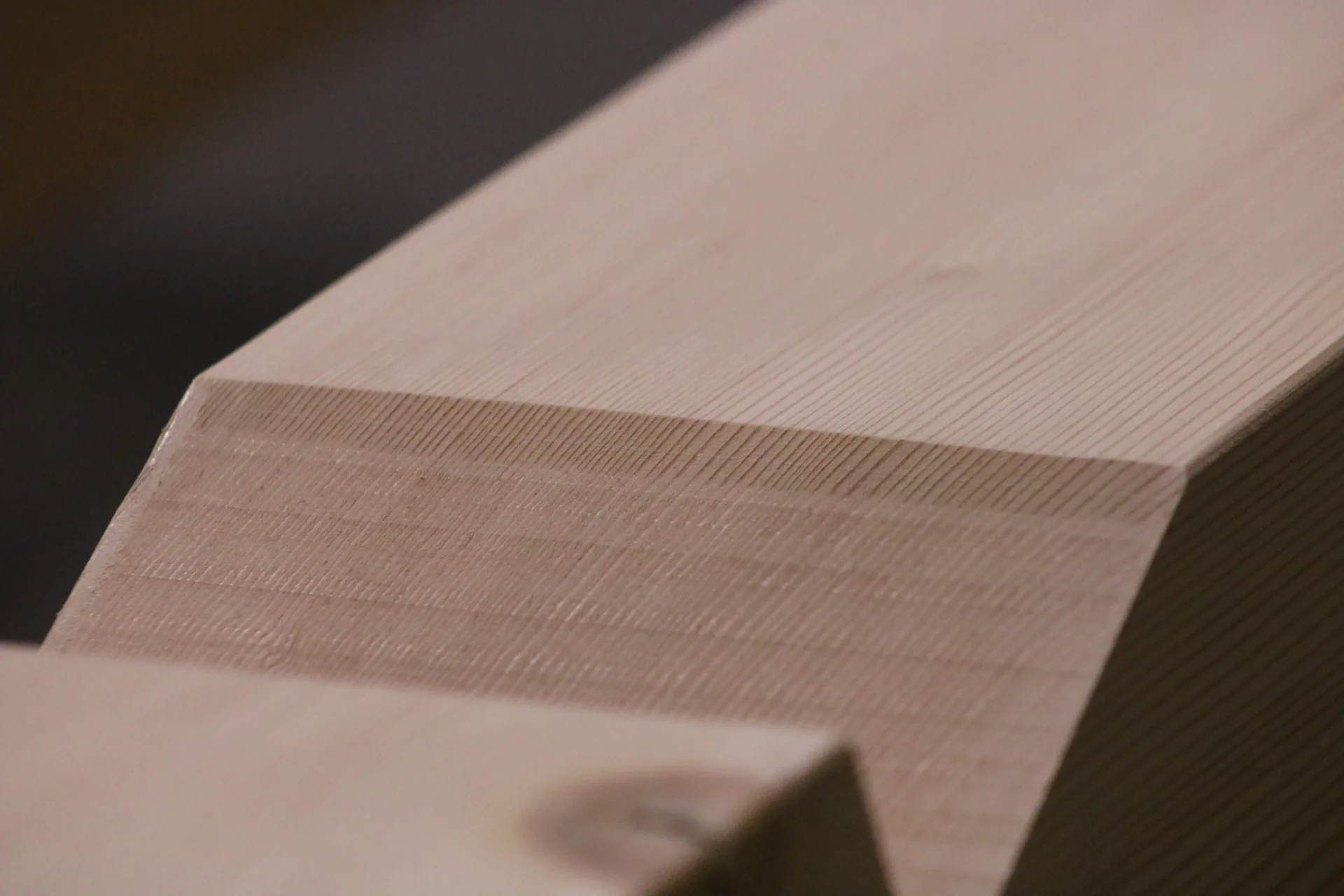
Across a great-room beam or a series of rafters, growth rings become part of the room’s material character. In our shop, the selected slow-growth interior fibre often shows a finer pattern than some of the broader-grained coastal stock we process. Closely spaced rings create fine bands across the timber face; wider rings make the contrast between lighter earlywood and darker latewood more prominent.
The cut also shapes that appearance. A face closer to vertical grain shows linear stripes, while a flatter cut reveals curved growth-ring figures. Ring spacing and grain orientation work together, so the appearance of a finished member reflects both the tree’s growth and how the timber was sawn.
Colour contributes another layer. Coastal Douglas-fir is generally lighter in colour and more uniform in texture than interior material. Across both sources, lighter sapwood contrasts with yellowish-to-reddish-brown heartwood. Knots and the distribution of heartwood and sapwood add to the character of individual members.
This is why a species name and stain colour do not fully describe a frame’s appearance. A coating works with the wood beneath it. For builders discussing finish references with clients, samples of the material and finish being supplied give a more useful reference than a photograph from another project.
For further detail on regional colour, growth-ring figure, and working properties, see naturally:wood’s Douglas-fir species profile.
Access to selected slow-growth interior Douglas-fir gives Canadian Timberframes a strong starting material for custom frames. Its fine grain is a quality we can carry through the posts, beams, and trusses that define the home’s timber architecture.
Location alone does not create the finished result. The practical advantage is the connection between the fibre resource, our log yard, and our sawmill. We can assess incoming logs against the project’s requirements before fabrication, considering the sections, lengths, structural grades, and appearance needed for the frame.
That connection brings material selection into the manufacturing process rather than treating it as a separate purchase. A beam’s finished dimensions must be recovered from a suitable log, and its visible faces come from the wood within that log. Decisions made at this stage influence what reaches the shop for joinery and finishing.
For a builder delivering a luxury home, the value is in the frame itself: selected fibre prepared with its structural role and architectural character in view. Our log selection and manufacturing process connects those early material decisions to the timber package delivered to site.
Every frame has a combination of member sizes, lengths, loads, and connection requirements. A substantial ridge beam, a long-span truss, and a series of smaller rafters place different demands on the logs from which they are produced. Suitable timber must meet the full specification, not simply offer the desired grain.
Our supply includes interior and coastal Douglas-fir so material can be selected around those requirements. Larger coastal trees provide access to substantial logs, making coastal fibre an important resource for large solid-sawn sections and long members in custom homes and commercial structures.
Both sources contribute to the frames we manufacture. Rocky Mountain fibre gives us access to the fine-grained material we value, while coastal supply extends the range of suitable logs available for demanding dimensions. The selection follows the project’s needs rather than a preference for one origin across every member.
For builders, the useful conversation is about what the frame needs to achieve: the engineered sections, the architectural expression, and the finish expectations. Those requirements give the manufacturing team a basis for selecting suitable fibre and preparing it as a coordinated timber package.
Free-of-heart-centre, or FOHC, timber illustrates how a specification affects log selection. FOHC excludes the pith—the tree’s central core—so the entire rectangular section must be sawn beside that centre rather than around it.
As the beam’s width and depth increase, the log needed to yield that section becomes substantially larger. The suitable wood must also continue for the full member length while meeting the required grade. A large-diameter log is therefore a starting point; it still has to yield the actual beam.
Access to larger coastal logs is particularly valuable for these requirements. It allows the sourcing and manufacturing team to pursue the substantial solid-sawn members called for by the design. Establishing their availability early helps builders coordinate the frame with the wider construction programme.
Where a design is being developed around long spans or large sections, our comparison of glulam and solid timber provides further reading on the performance and appearance of those structural products.
Maintaining access to suitable interior Douglas-fir supports the material selection behind our frames. Our BCTS Category 4 value-added registration adds a route to bid on timber sale licences through British Columbia’s Value-added Manufacturing Program.
These opportunities complement our established sourcing and build on our position in Golden. Registration is a route to pursue supply, rather than an allocation of timber; project quantities and delivery commitments remain tied to material secured for the build.
The finished frame reflects decisions made from log selection onward. Growing conditions shape the fibre; selection identifies suitable material; manufacturing brings its structural and visual qualities into the building.
Canadian Timberframes’ access to slow-growth Rocky Mountain Douglas-fir is a material advantage within that process. Combined with coastal supply and on-site processing, it supports frames selected and fabricated around the needs of each project.
Planning a timber frame home? Share your drawings with our team to discuss the material, member dimensions, and fabrication approach for your frame.
They record slower diameter growth and create a finer grain pattern. The proportion of denser latewood within the rings helps explain physical properties, while structural grading assesses the timber for its intended use.
We consider the specified dimensions, lengths, structural grade, and appearance requirements together. Interior and coastal Douglas-fir form part of our supply, allowing selection to follow the needs of the frame.
No. Ring spacing is one material characteristic. The specified species or species group, structural grade, member dimensions, loads, and service conditions govern the engineered design.


How slow-growth Rocky Mountain fibre, careful log selection, and manufacturing in Golden, BC contribute to the quality of your timber frame.
Read more
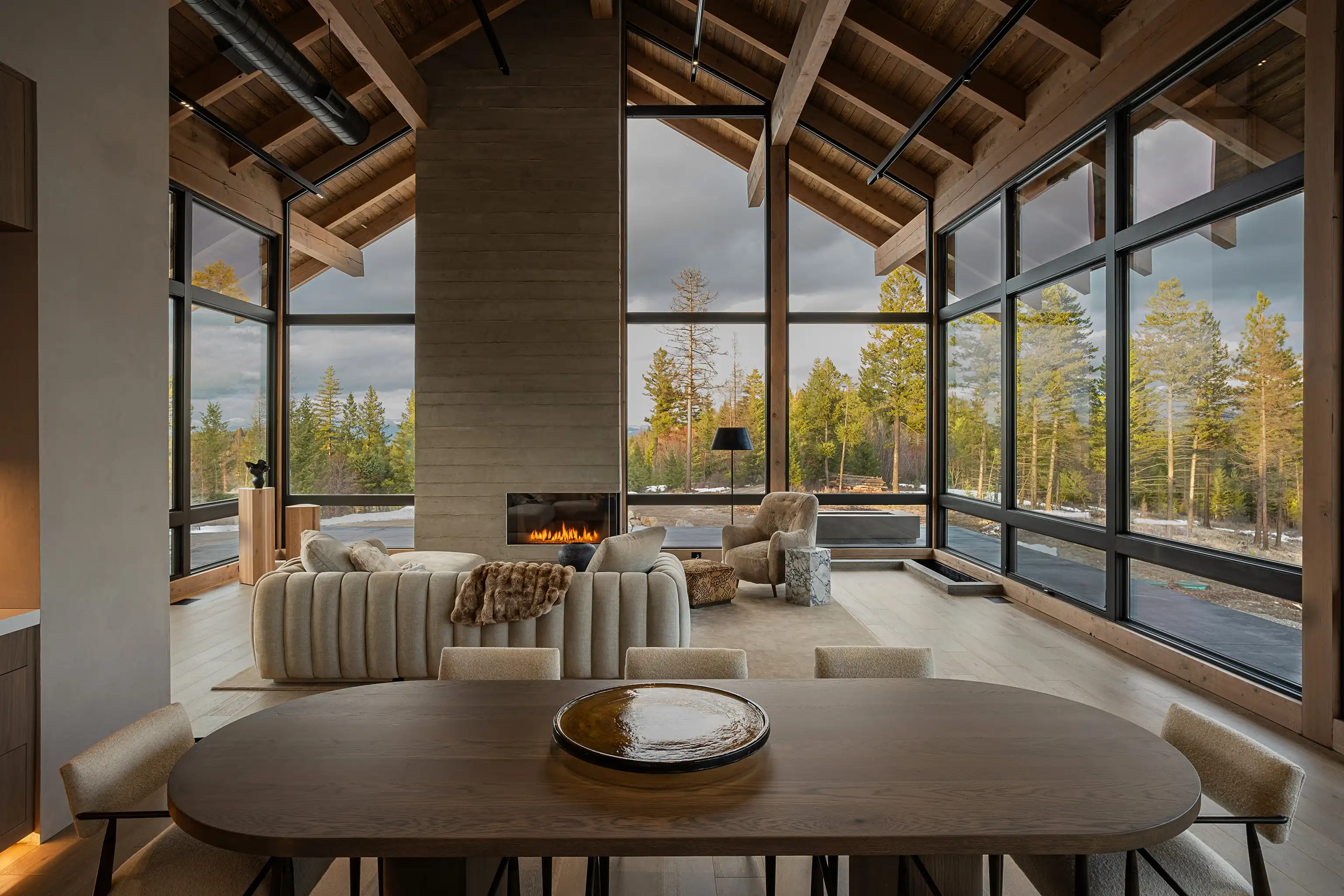
A practical guide to heavy timber connections and finish interfaces, explaining how movement, glazing, stone, and millwork details protect architectural intent in custom homes.
Read more
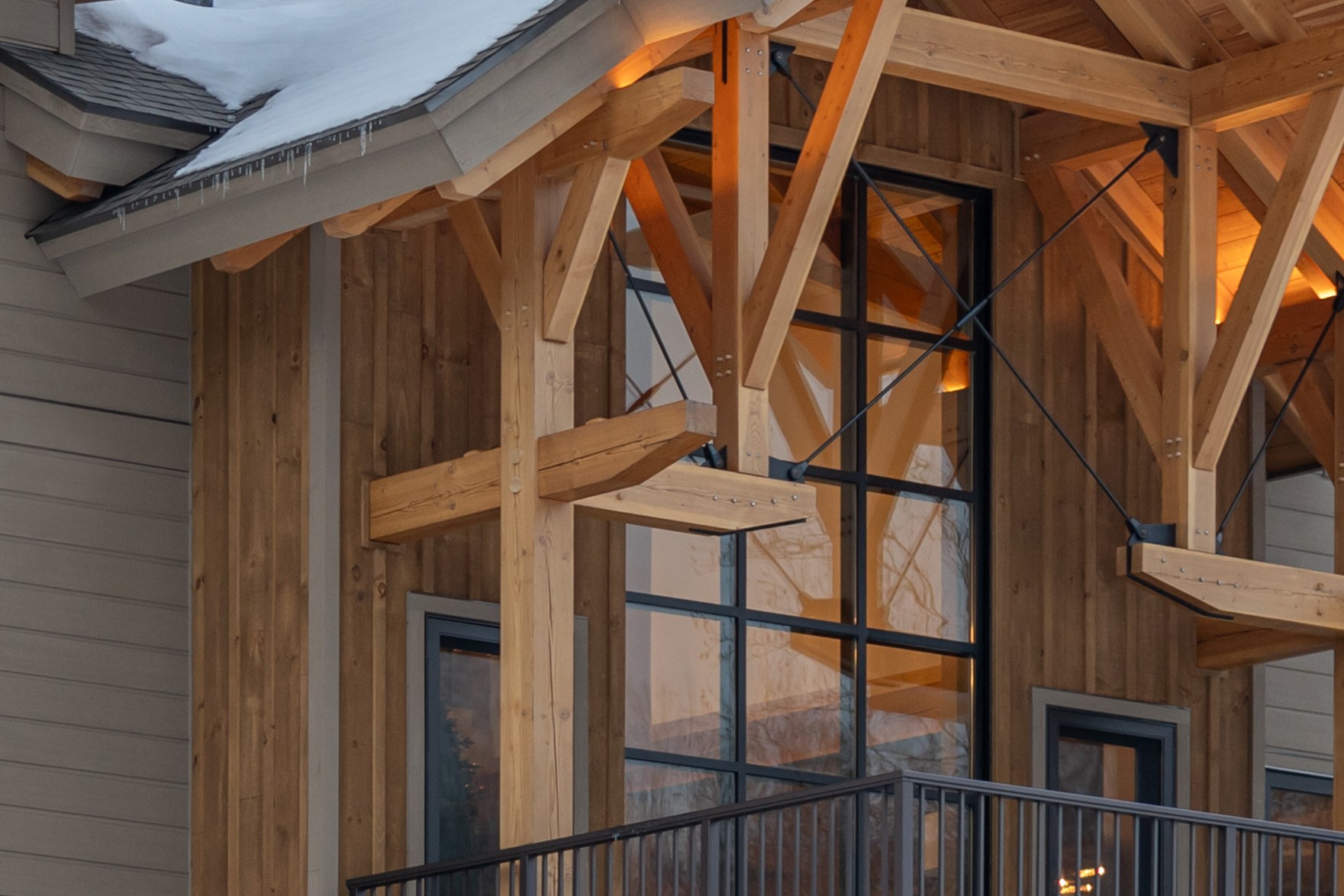
Compare timber species and textures, understand moisture and FOHC sourcing, and identify when glulam suits a luxury custom residential project.
Read more
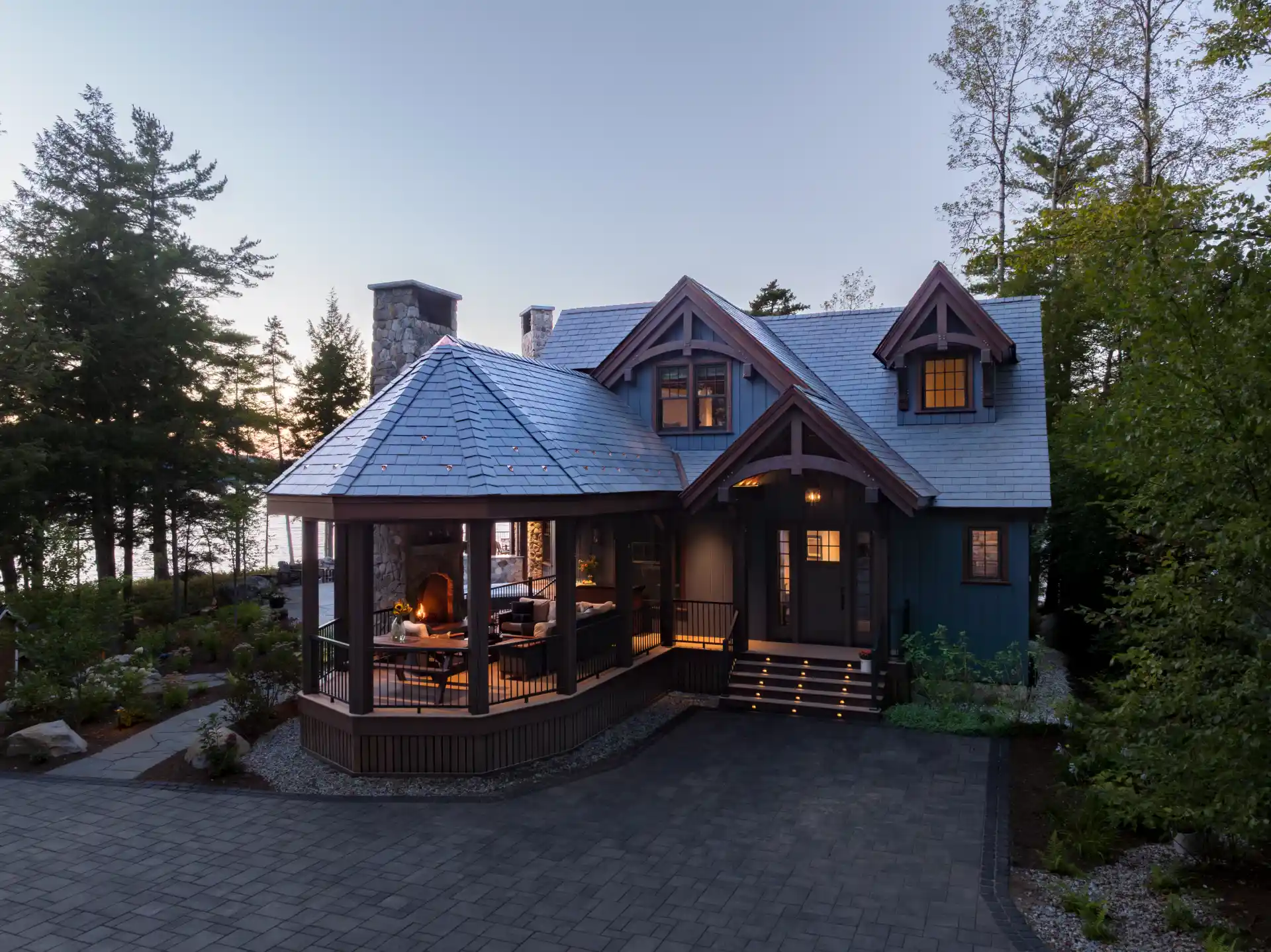
When to engage the manufacturer, how files exchange, what CNC capacity allows, and how connections get detailed on prefabricated timber.
Read more
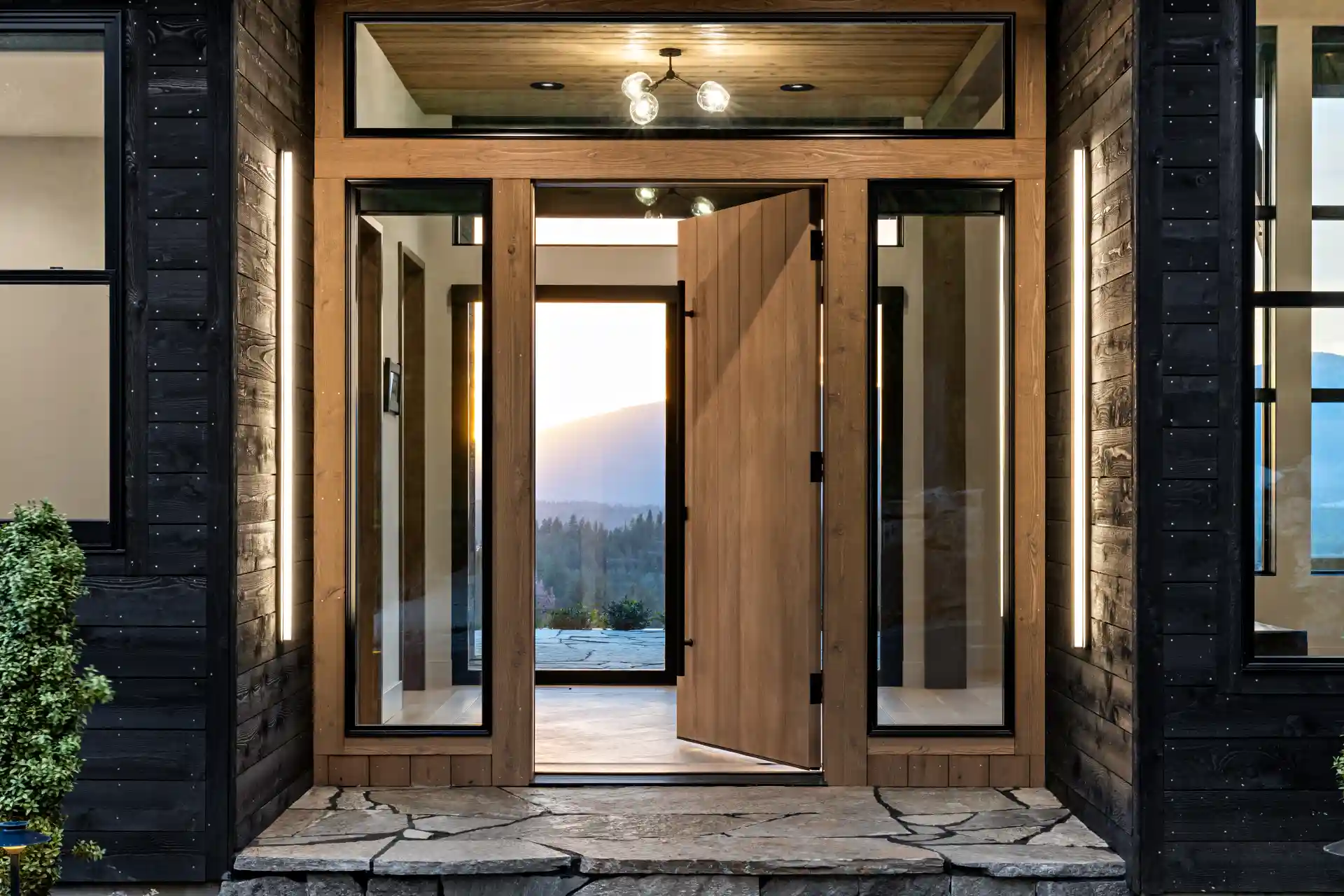
Why do residential timber frame projects exceed budget? Learn the most common cost drivers in luxury timber frame homes and how a shared model helps builders stay on track.
Read more
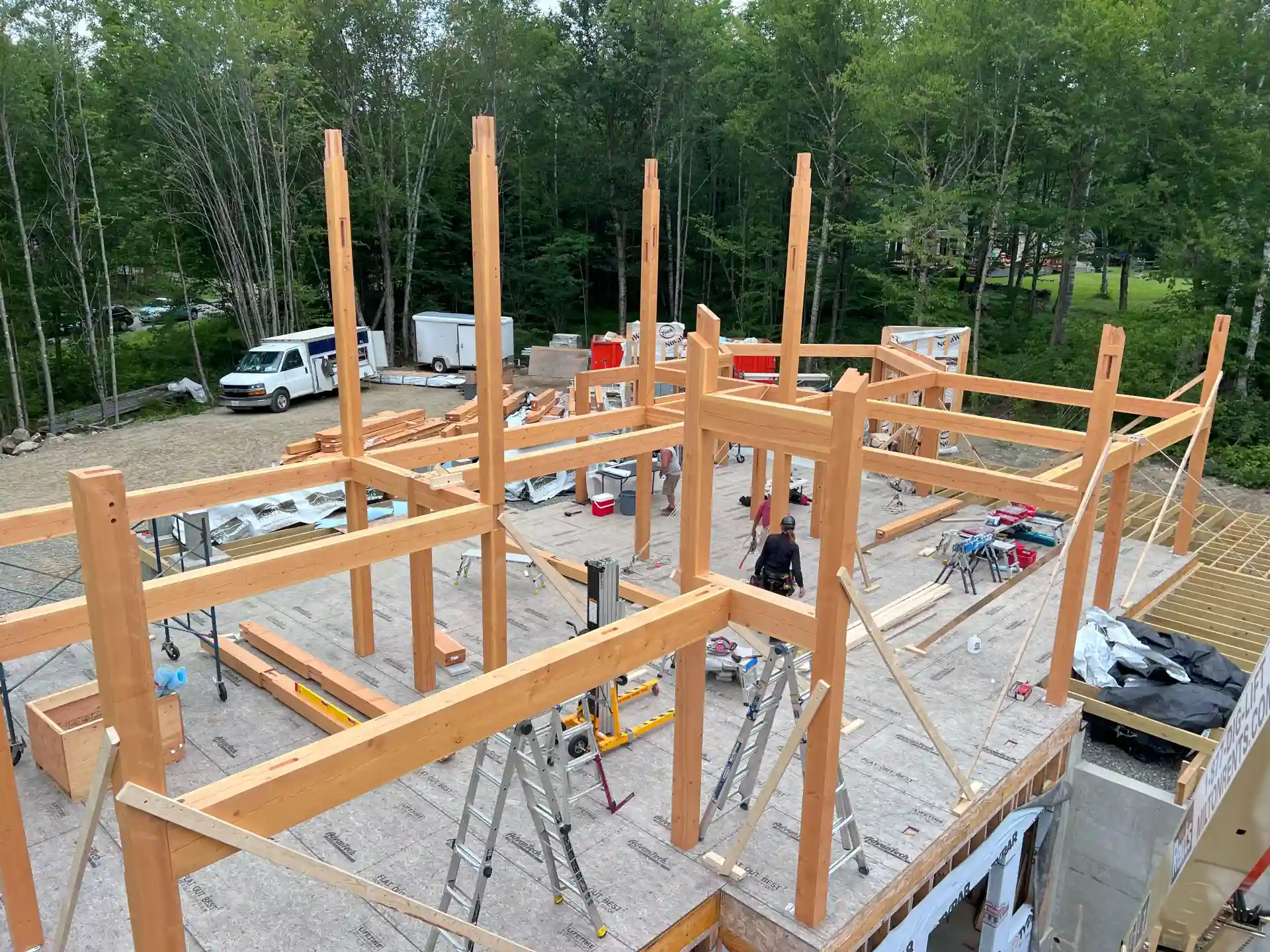
A custom timber frame kit isn't a flat-pack house. Learn what's included, what's not, and how to read a quote so you avoid budget surprises.
Read more
.webp)
Honest comparison of timber and steel on cost, carbon, and schedule for commercial work. Where each wins, and why most commercial projects use a hybrid of both.
Read more

Choosing a timber frame company is harder than it looks. Eight questions to ask any supplier before you sign, with what their answers tell you about scope, manufacturing, and support.
Read more
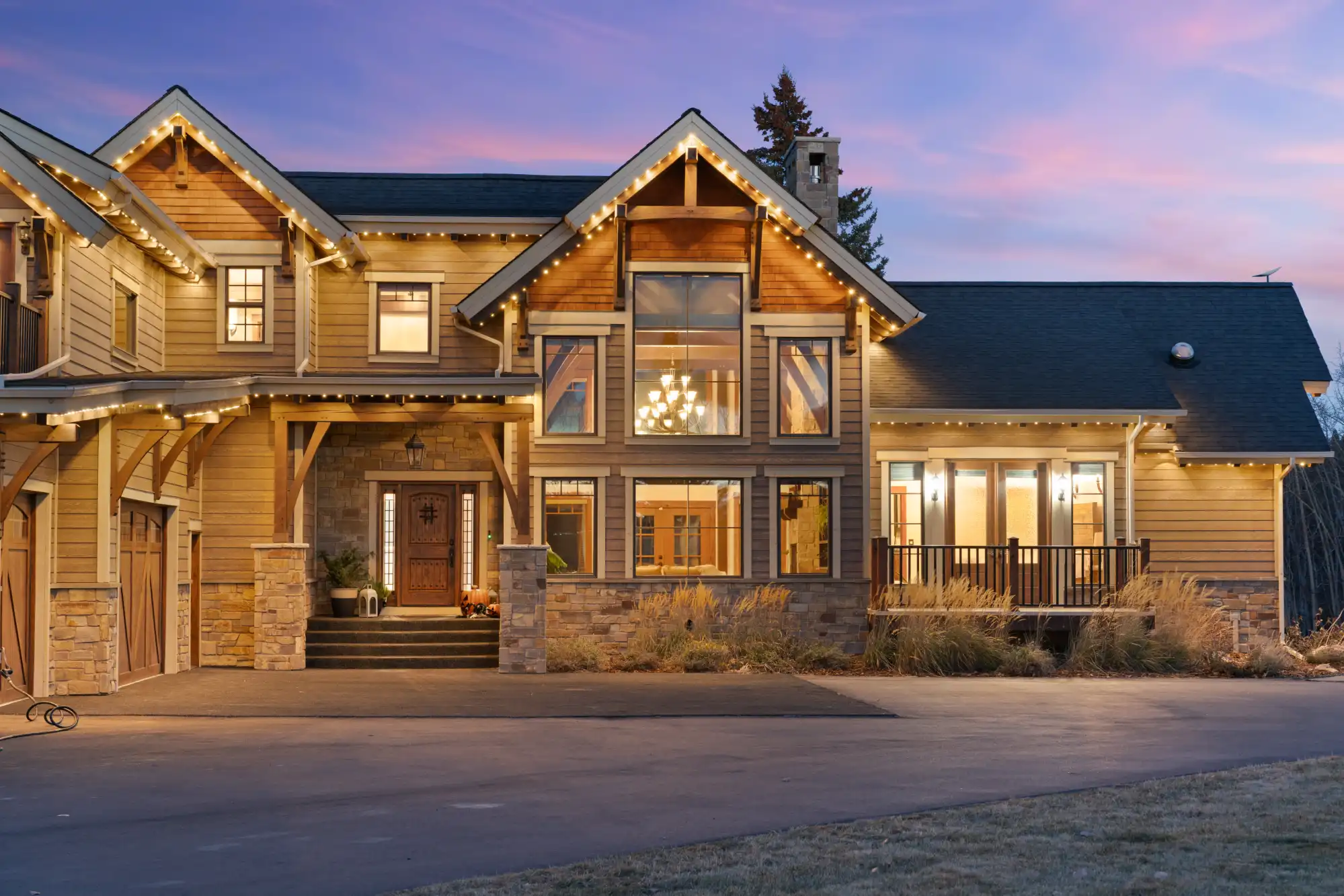
A guide to what drives timber frame home costs in 2026 — from structural package pricing and total build cost per square foot, to the design choices that genuinely push the number up or down.
Read more
.webp)
Discover what goes into building a luxury timber frame home, including realistic timelines, turnkey investment ranges, and expert planning insights to help you prepare for a successful custom build.
Read more

Timber framing combines natural beauty with strength, using glulam and solid timber-each with unique advantages. Glulam offers engineered strength and design flexibility for long spans and curves, while solid timber provides authentic character and warmth. Both are sustainable, and blending them lets you balance performance with natural aesthetics to create strong, visually appealing timber structures.
Read more


